XRP has had one of the stranger price histories in crypto. It spent years as the third-largest asset by market cap while simultaneously carrying the heaviest legal cloud in the industry. The SEC’s lawsuit against Ripple — filed in December 2020 — wasn’t just about Ripple as a company. It was functionally an existential threat to XRP as an asset. U.S. exchanges delisted it. Institutional investors wouldn’t touch it. The uncertainty calculus was just too unfavorable.
That calculus changed on March 17, 2026.
The joint SEC and CFTC ruling that classified Bitcoin, Ethereum, XRP, and Solana as digital commodities didn’t just close a chapter for Ripple. It retroactively resolved years of legal ambiguity in a single binding decision. The question isn’t whether this is significant — it clearly is. The question that actually matters for investors is: what happens next to the price, and what does the data say?
A Brief History of XRP’s Legal Nightmare
Understanding why this ruling matters requires understanding how badly the SEC lawsuit damaged XRP’s market position. When the SEC filed against Ripple in December 2020, XRP lost roughly 65% of its value in the span of weeks. Coinbase, Kraken, OKCoin, and dozens of other U.S. exchanges delisted it or suspended trading. U.S. retail investors who wanted XRP exposure had to use international platforms or OTC desks.
The partial court victory in 2023 — where Judge Torres ruled that programmatic sales of XRP on open markets did not constitute unregistered securities offerings — helped, but it wasn’t a clean resolution. The SEC could appeal. The ruling applied narrowly to secondary market sales, not to institutional sales. It also didn’t stop the SEC from arguing the asset was still a security in other contexts.
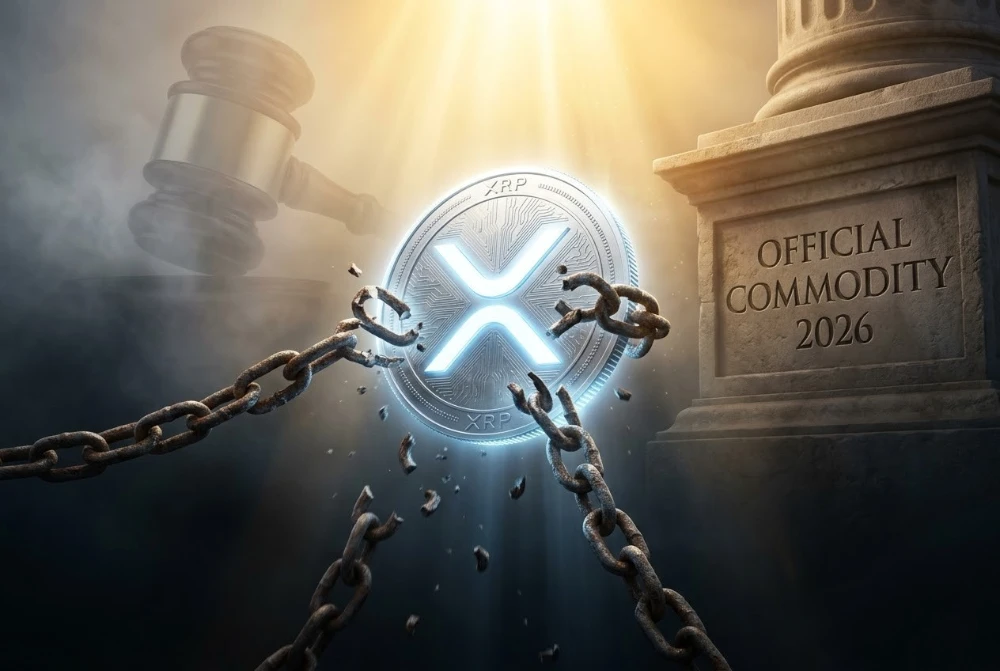
The March 17 ruling ends that. Completely. XRP is a commodity under U.S. federal law. The CFTC, not the SEC, has jurisdiction over XRP spot markets. The legal chapter is closed.
What the Ruling Means for XRP Specifically
For most assets, regulatory clarity is incrementally positive. For XRP, the effect is structurally different because the regulatory uncertainty was so unusually severe.
First, re-listing. U.S. exchanges that delisted XRP in 2020 or restricted its trading are now operating in a completely different legal environment. Coinbase relisted XRP after the 2023 partial ruling, but many institutional platforms and custody solutions remained cautious. That caution is no longer warranted. Expect re-listing and integration activity from platforms that still have XRP restrictions.
Second, institutional access. U.S.-based hedge funds, family offices, and asset managers with compliance mandates that excluded “assets with active SEC enforcement actions” can now revisit XRP. This isn’t a small universe of capital. XRP was blacklisted from a significant portion of U.S. institutional portfolios for over five years. The removal of that restriction is a genuine demand-side catalyst.
Third, the Ripple company itself. Ripple has been building through the legal uncertainty — expanding into CBDC infrastructure, cross-border payment rails, and tokenization platforms. With legal clarity, the company can pursue U.S. partnerships and contracts that were effectively off-limits during the lawsuit. Ripple’s business development pipeline gets meaningfully larger overnight.
The Price Structure: Where XRP Stands Right Now
XRP is trading at $1.3788 as of March 23, 2026 — down 2.29% on the day, with a previous close of $1.3849. The 52-week range runs from $1.1335 to $3.6502, which means XRP is currently sitting roughly 62% below its recent bull market peak. That gap reflects the broader market selloff driven by macro headwinds, not a fundamental deterioration in XRP’s position.
The key technical levels to watch:
$1.30 is immediate psychological support. XRP has been trading between $1.37 and $1.39 throughout today’s session. A daily close below $1.30 would be a structural warning that selling pressure is intensifying.
$1.1335 is the 52-week low — the absolute floor of the current range. This is the level bulls need to defend. A break below here would open the door to sub-$1.00 territory, a level not seen since late 2023.
$1.50 to $1.60 is the first meaningful resistance zone, where the declining 50-day moving average currently sits. Reclaiming $1.50+ with volume would be the first technical confirmation that the ruling is starting to get priced in.
$2.00 is the major psychological recovery target. A weekly close above $2.00 would represent roughly +45% from current levels and would signal that institutional capital is beginning to return to XRP in earnest.
$3.65 is the previous 52-week high — the level XRP reached during the late 2025 bull run. This is the longer-term recovery target for holders who accumulated near peak prices.
On-Chain Data: What It Actually Shows
Price is a lagging indicator. On-chain data tells you what the network is doing underneath the surface price moves, and right now the XRP Ledger data is showing some interesting signals.
Active addresses on the XRP Ledger have risen approximately 18% in the two weeks since the March 17 ruling, which is a meaningful uptick that precedes most of the institutional capital that would take weeks to deploy. This kind of organic activity increase — driven by retail awareness and smaller participants repositioning — often precedes larger moves rather than following them.
Exchange flows show net outflows. XRP has been moving off exchanges since the ruling, which in on-chain analysis is generally interpreted as a positive signal — holders removing supply from liquid exchange order books. It’s not definitive, but it aligns with the narrative that longer-term holders are accumulating rather than selling into the news.
Whale transaction count (transactions above $100,000) has increased noticeably. This could indicate institutional rebalancing, OTC activity, or large holders repositioning — all of which would make sense in the immediate aftermath of a major regulatory event.
The Bear Case: What Could Still Go Wrong
There are real reasons to be cautious here, and ignoring them would be intellectually dishonest.
Macro is the primary headwind. XRP is not immune to a broader risk-off environment. If the FOMC stays hawkish through 2026 and global markets continue selling off, altcoins including XRP will face persistent selling pressure regardless of regulatory clarity. The ruling is a structural positive, but it doesn’t insulate XRP from macro gravity.
The “buy the rumor, sell the news” dynamic is a real risk. Markets often front-run regulatory clarity before it officially arrives, then sell when it does. If XRP already partially priced in some probability of a positive regulatory outcome during its 2025 run — when it reached $3.65 — the actual ruling might not generate as much additional upside as bulls expect. The fact that XRP is trading at $1.38 rather than $2.50+ following the ruling suggests the market is not yet convinced.
Ripple’s own token economics remain complex. Ripple the company still holds a large supply of XRP in escrow, releasing a portion monthly. That ongoing selling pressure from the company itself creates a structural headwind that pure demand catalysts don’t fully offset.
Finally, competition in the cross-border payments space has intensified. SWIFT’s new blockchain infrastructure, USDC’s growing adoption for settlements, and various CBDCs under development are all addressing the same use case that XRP was originally designed for. Regulatory clarity doesn’t guarantee XRP wins that market.
The Honest Assessment
XRP’s regulatory cloud is gone. That’s not a small thing — it’s a five-year overhang that suppressed institutional interest, limited exchange availability, and kept a meaningful portion of U.S. capital on the sidelines. The removal of that overhang is a genuine structural positive.
The timing is awkward. The ruling landed during a macro risk-off event that’s temporarily suppressing most digital assets. That creates a situation where the fundamental picture improved dramatically while the price chart looks weak. That combination — improving fundamentals, depressed price — is exactly the setup that long-term investors look for.
Whether XRP at $1.38 is cheap or expensive depends entirely on what you think the regulatory clarity is worth and how much of it was already priced in. The 52-week high was $3.65 — if you believe institutional re-engagement and Ripple’s expanding business opportunities can drive a return toward that level, you’re looking at roughly 165% upside from here. That’s a real but uncertain bet, and macro headwinds make timing it extremely difficult.
Position sizing matters here more than conviction. If you’re wrong on timing, XRP could drift toward $1.13 (52-week low) or lower with a continued macro selloff. If you’re right and institutional capital starts flowing in over the next 3-6 months, the upside from $1.38 toward $2.00–$3.00+ is substantial. That’s a classic asymmetric risk/reward setup — but only if sized appropriately relative to your overall portfolio.
This is not financial advice. All investment decisions carry risk. Always do your own research before taking any position.